 KHLT
KHLT Identity Layer
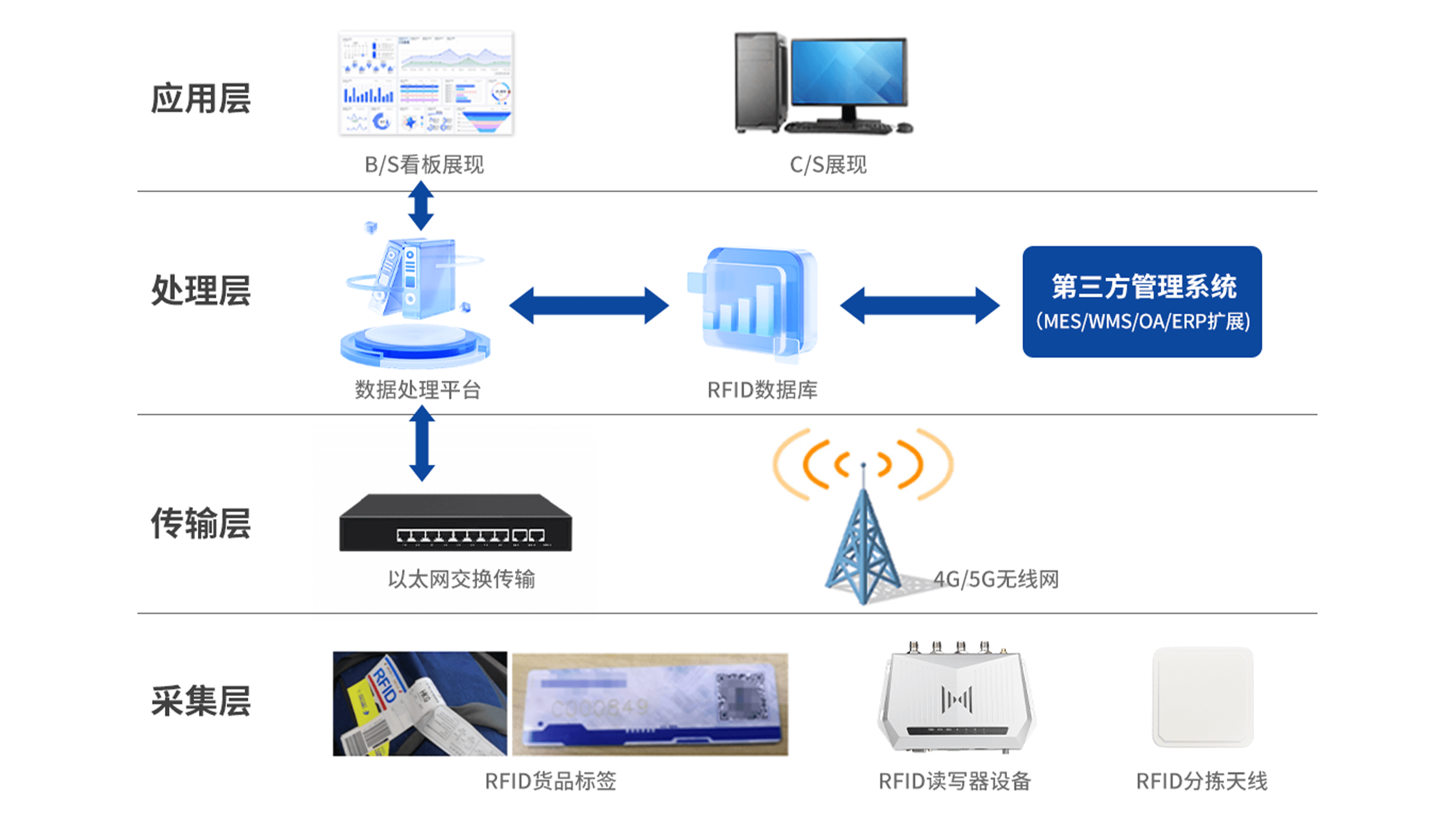
Write unique RFID tag information for parcels, totes, or pallets.
Built for inbound, outbound, cycle-counting, and dock-door workflows, with stable RFID performance in dense metallic environments.

Designed for e-commerce warehouses, express sorting hubs, loose item sorting, and high-frequency parcel flow scenarios, it replaces manual item-by-item scanning with RFID automatic identification to improve sorting efficiency, accuracy, and full-process visibility.
Write unique RFID tag information for parcels, totes, or pallets.
When items pass through entrances, passages, or sorting chutes, readers automatically collect tag data.
After middleware cleanses the data, WMS/SCS generates sorting instructions based on orders and destinations.
Clarify the highest-friction breakdowns first so architecture, flow, and device choices share the same baseline.
During peak order periods, reliance on manual verification and item-by-item scanning can lead to cargo backlog and transit delays.
Visual fatigue and operational negligence can cause items to be sent to the wrong chute, resulting in return/exchange and redelivery costs.
Lack of real-time records when items pass through entry, sorting, and outbound nodes, making it difficult to locate anomalies promptly.
Traditional data relies on manual entry, unable to support real-time throughput analysis, route optimization, and staff scheduling.
Once the architecture meets the floor, everything comes back to this execution path. The smoother the flow, the more credible the results.

Write unique RFID tag information for parcels, totes, or pallets.

When items pass through entrances, passages, or sorting chutes, readers automatically collect tag data.
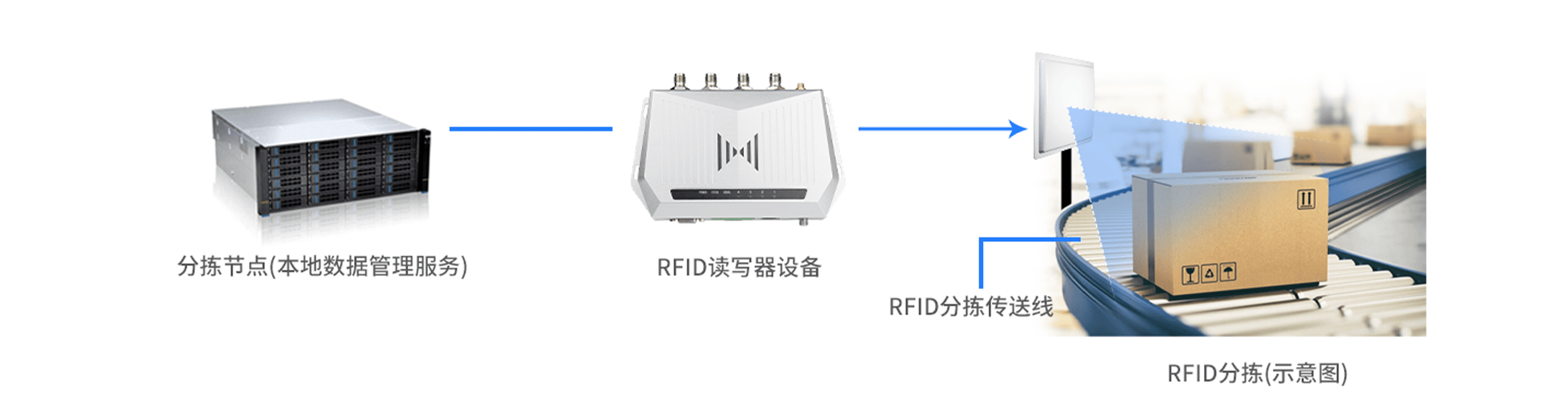
After middleware cleanses the data, WMS/SCS generates sorting instructions based on orders and destinations.
Sorting results, anomaly events, and location status are written back to the business system.
Measure the outcomes the workflow actually produces, then move into capability and rollout priorities.
Supports high-throughput identification without item-by-item scanning.
Checkpoint validation and routing logic reduce sorting and handling mistakes.
Key node status is captured as operations move through the process.
Movement history and anomaly events remain queryable end to end.
Stable outcomes depend on rules, visibility, and system handoff operating as one software layer.
After middleware cleanses the data, WMS/SCS generates sorting instructions based on orders and destinations.
Write unique RFID tag information for parcels, totes, or pallets.
Place the capabilities inside real operating scenarios to see where rollout should start and where it should expand next.
Suitable for e-commerce warehouses operations that need faster identification and clearer flow visibility.

Suitable for express sorting hubs operations that need faster identification and clearer flow visibility.

Suitable for loose item sorting operations that need faster identification and clearer flow visibility.
After the scenarios and capability boundaries are clear, narrow the design into a device mix that is easier to select and deliver.
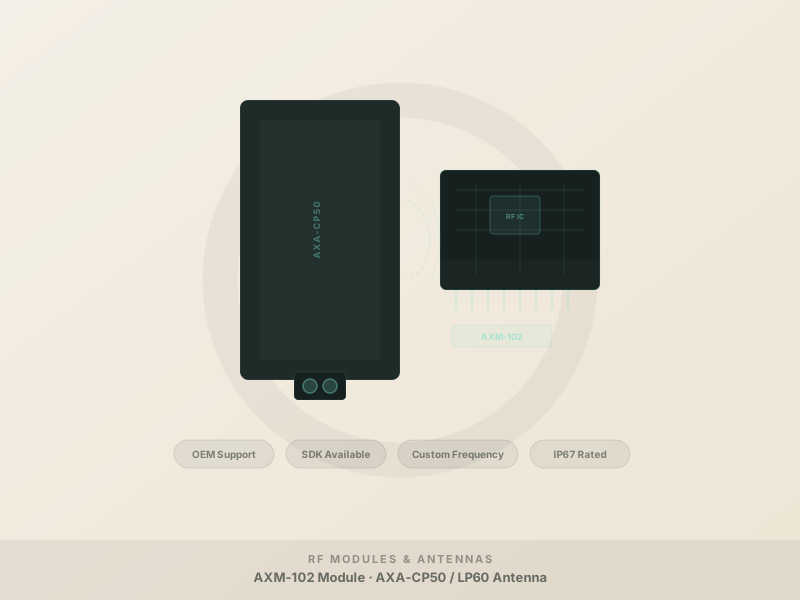
Provides each tracked item, tote, pallet, or asset with a unique electronic identity.
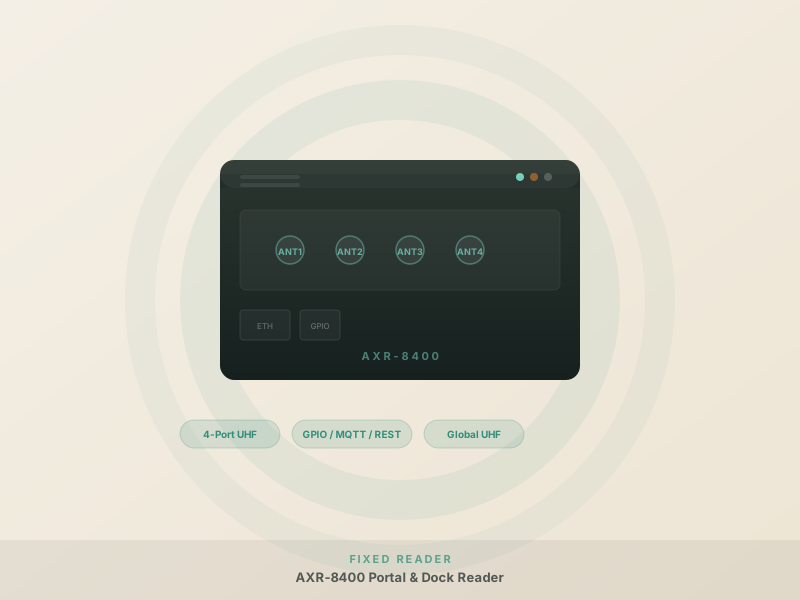
Captures RFID events automatically at passages, checkpoints, dock doors, or line-side stations.
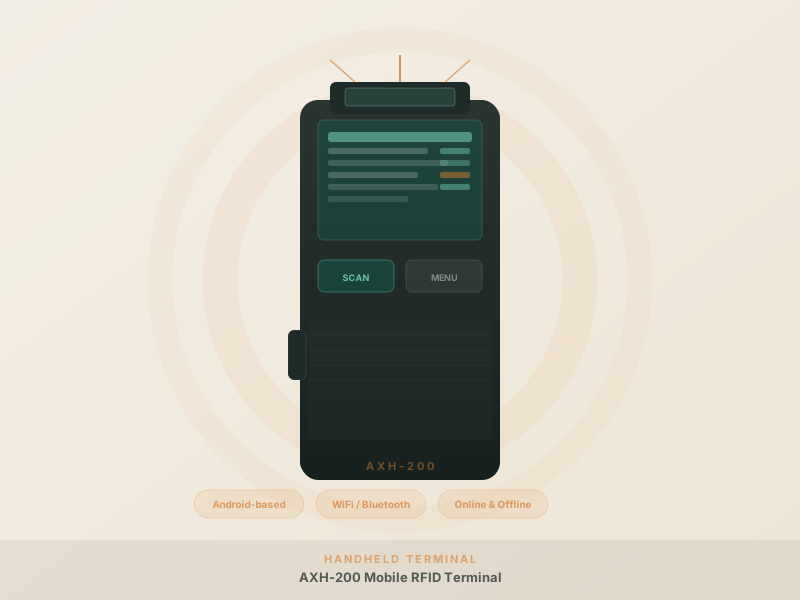
Supports exception review, manual verification, and mobile follow-up tasks on the floor. / Filters, deduplicates, and hands structured RFID events into WMS, ERP, MES, or control systems.
Talk with our systems team about site conditions, interfaces, and project goals to map a practical rollout path.