 KHLT
KHLT Identity Layer
Attach RFID pallet tags to pallets while retaining barcode compatibility for operation.
Built for inbound, outbound, cycle-counting, and dock-door workflows, with stable RFID performance in dense metallic environments.
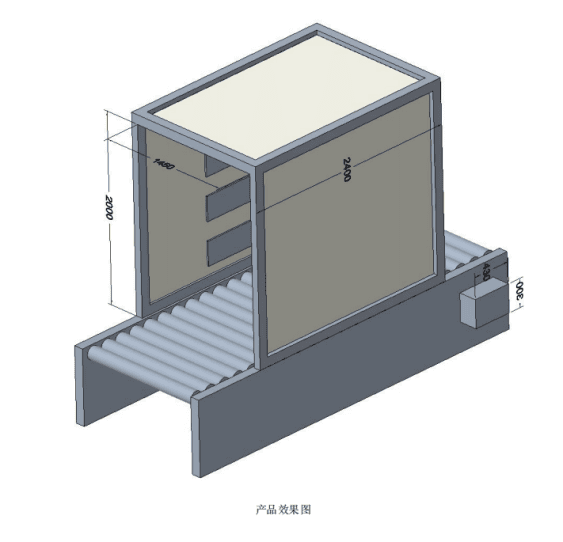
For the scenario of large-scale pallet recycling within the factory, RFID replaces easily damaged one-dimensional barcodes to achieve electronic pallet identification, automatic stacking, inbound/outbound verification, and real-time inventory.
Attach RFID pallet tags to pallets while retaining barcode compatibility for operation.
Replace existing barcode readers with RFID industrial readers.
Install a gantry on the production line with proper shielding to achieve automatic pallet stacking and binding.
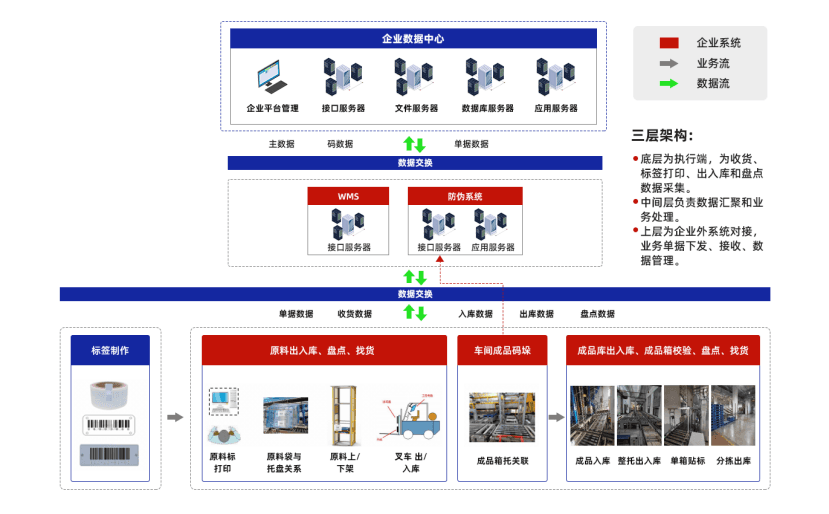
Clarify the highest-friction breakdowns first so architecture, flow, and device choices share the same baseline.
Pallet barcodes are prone to scratching, deformation, aging, or falling off, causing identification failures.
The relationship between raw material bags, supplier pallets, and factory pallets relies on manual barcode scanning for association.
Manual barcode scanning operations are inefficient, with continuously increasing labor and maintenance costs.
Pallets lack real-time, automated circulation records during in-factory reuse.
Once the architecture meets the floor, everything comes back to this execution path. The smoother the flow, the more credible the results.
Attach RFID pallet tags to pallets while retaining barcode compatibility for operation.
Replace existing barcode readers with RFID industrial readers.
Install a gantry on the production line with proper shielding to achieve automatic pallet stacking and binding.
Add RFID PDA devices for batch collection and verification during inbound and outbound operations.
Measure the outcomes the workflow actually produces, then move into capability and rollout priorities.
Supports high-throughput identification without item-by-item scanning.
Earlier validation helps contain rework before it spreads downstream.
Key node status is captured as operations move through the process.
Operators gain clearer visibility across the operating path.
Stable outcomes depend on rules, visibility, and system handoff operating as one software layer.
Attach RFID pallet tags to pallets while retaining barcode compatibility for operation.
Replace existing barcode readers with RFID industrial readers.
Place the capabilities inside real operating scenarios to see where rollout should start and where it should expand next.
Suitable for the scenario of large-scale pallet recycling within the factory operations that need faster identification and clearer flow visibility.
Suitable for rfid replaces easily damaged one-dimensional barcodes to achieve electronic pallet identification operations that need faster identification and clearer flow visibility.
Suitable for automatic stacking operations that need faster identification and clearer flow visibility.
After the scenarios and capability boundaries are clear, narrow the design into a device mix that is easier to select and deliver.
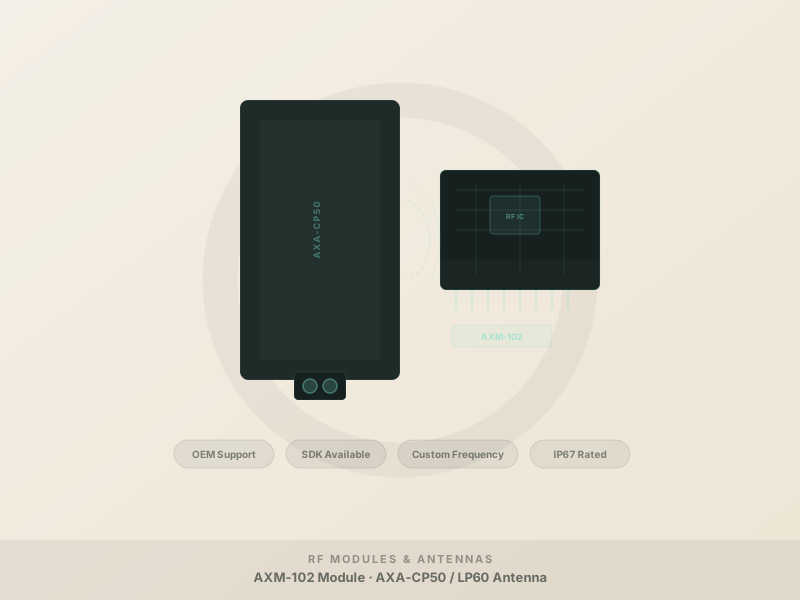
Provides each tracked item, tote, pallet, or asset with a unique electronic identity.
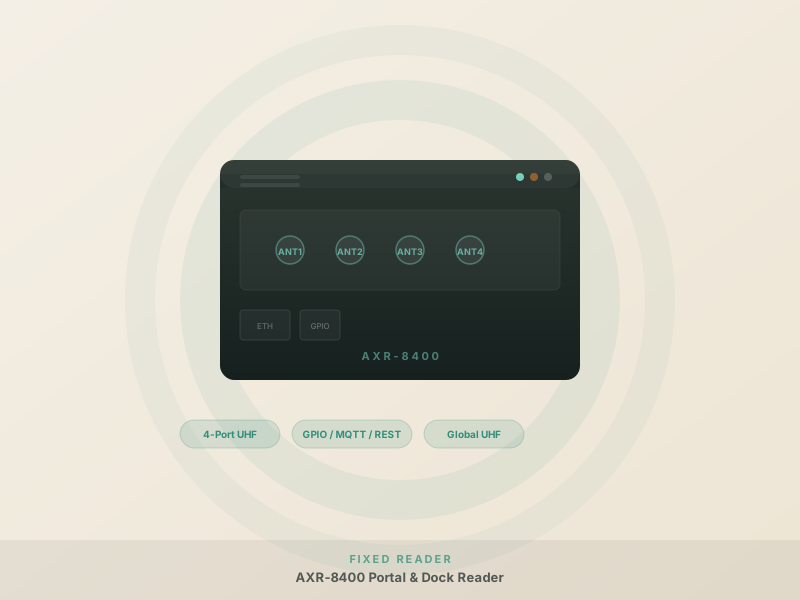
Captures RFID events automatically at passages, checkpoints, dock doors, or line-side stations.
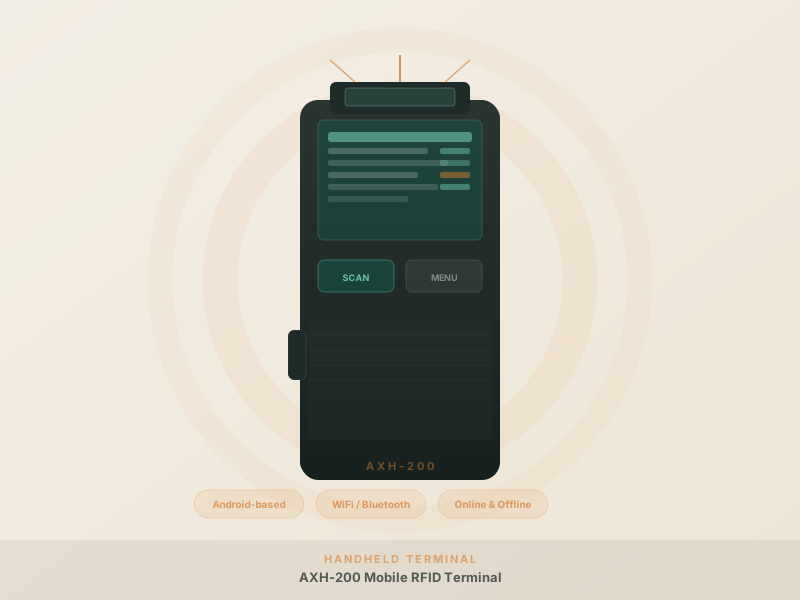
Supports exception review, manual verification, and mobile follow-up tasks on the floor. / Filters, deduplicates, and hands structured RFID events into WMS, ERP, MES, or control systems.
Talk with our systems team about site conditions, interfaces, and project goals to map a practical rollout path.