RFID-based Solution for Power Battery Winding Production Management
System Overview
With the rapid development of technology, the new energy lithium battery industry is undergoing unprecedented changes. As a new generation of green energy, lithium batteries are increasingly used in electric vehicles, energy storage systems, and other fields. However, with large-scale production, issues such as quality control, production traceability, and inventory management have become prominent. Currently, there are about hundreds of domestic power battery manufacturers, but due to low automation, many companies suffer from low production efficiency, low product yield, and information silos. This has made it difficult to achieve substantial breakthroughs in power battery technology and consistency, seriously affecting the overall performance of power batteries and constraining the development of China's new energy vehicle industry.
Under traditional management models, most production information is recorded manually by workers, which is cumbersome, inefficient, and prone to production data confusion, loss of product data identity, and inconsistency between electrode sheet accounts and actual consumption due to untimely updates.
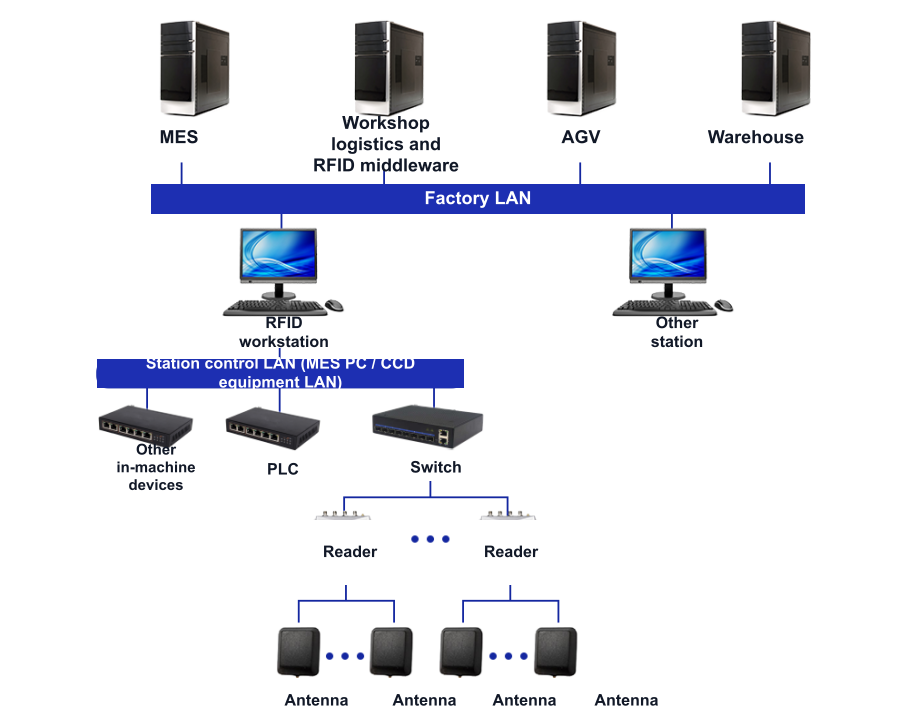
The data collection solution for power battery winding production lines uses UHF RFID technology to attach a fixed uniquely coded RFID tag to each reel. The tag ID serves as the unique electronic ID of the reel. Through wireless identification, data is collected automatically and contactlessly in each production process. RFID collection devices are installed on each process machine to automatically identify and collect the reel electronic ID. The collected reel electronic ID data is uploaded to the RFID client software, achieving the management goals of process visualization, quality traceability, and high efficiency.
System Framework
Install RFID tags on the rollers of lithium battery production to provide a unique identity for the battery. Install readers at the loading and unloading points of each production process to achieve automated data collection, transmission, analysis, processing, and statistics, and record production data in real time. Integrate the collected data with the Manufacturing Execution System (MES), and through a unified database management system, integrate functions such as production scheduling, product tracking, quality control, and equipment fault analysis.
System Advantages
Visibility and Traceability
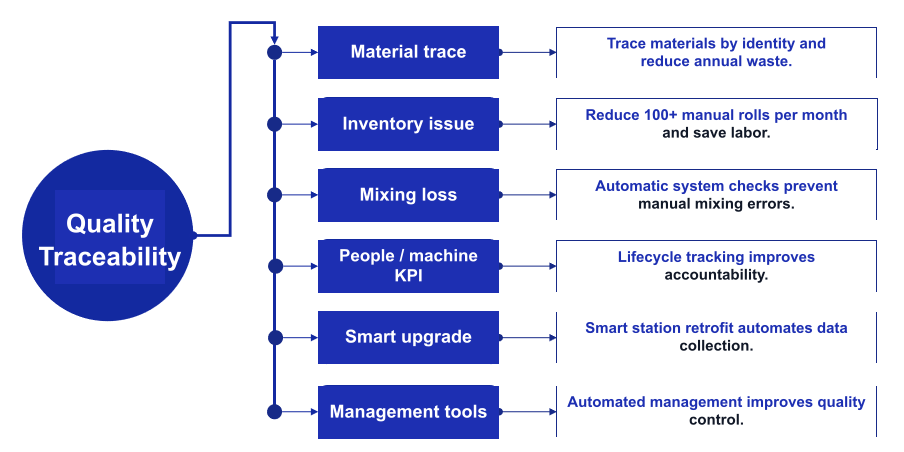
RFID tags serve as information carriers, collecting logistics, production, and quality information in real time, ensuring full visibility and traceability. Analyze records of materials, production lines, equipment, operators, and quality during product production to achieve data backtracking.
Automatic Error Prevention and Continuous Improvement
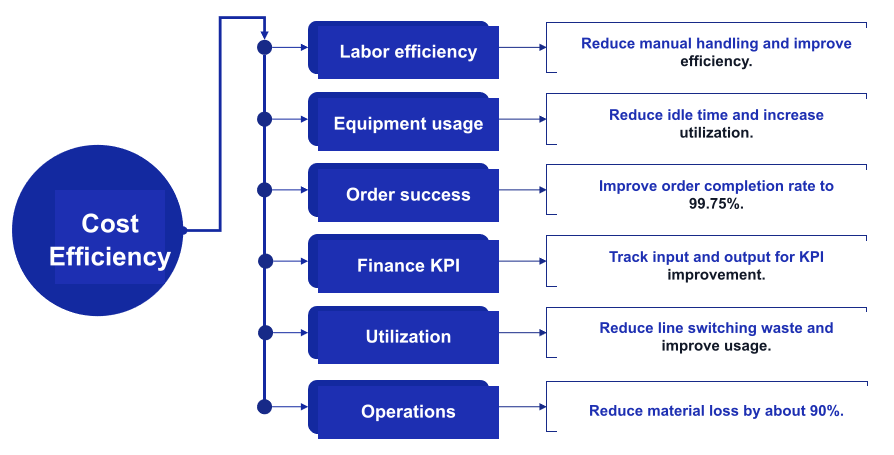
RFID technology effectively prevents human errors and improves production efficiency. Collect quality defect data in real time, and continuously improve product quality through data analysis and early warning mechanisms.
System Products
Install RFID tags on the rollers of lithium battery production to provide a unique identity for the battery. Install antennas at the loading and unloading nodes of each production process, and deploy fixed readers at the processes, connecting multiple antenna nodes to the fixed reader, greatly reducing equipment deployment costs.