Application Solution for Logistics Sorting Management Based on RFID Technology
Abstract
With the explosive growth of e-commerce and the increasing complexity of global supply chains, the logistics industry is facing unprecedented pressure on efficiency, accuracy, and cost. Traditional manual or semi-automated sorting models can no longer meet the high-speed and precise demands of modern logistics. This solution aims to deeply explore the application solution for logistics sorting management based on Radio Frequency Identification (RFID) technology, explain how RFID technology provides targeted and efficient solutions through its unique technical advantages, and analyze the technical architecture, performance indicators, and investment return potential of this solution, providing a comprehensive reference for the technological upgrade and decision-making of logistics enterprises.
Chapter 1: Core Pain Points and Challenges of Modern Logistics Sorting Operations
1.1. Efficiency Bottleneck: Low Speed and High Time Cost
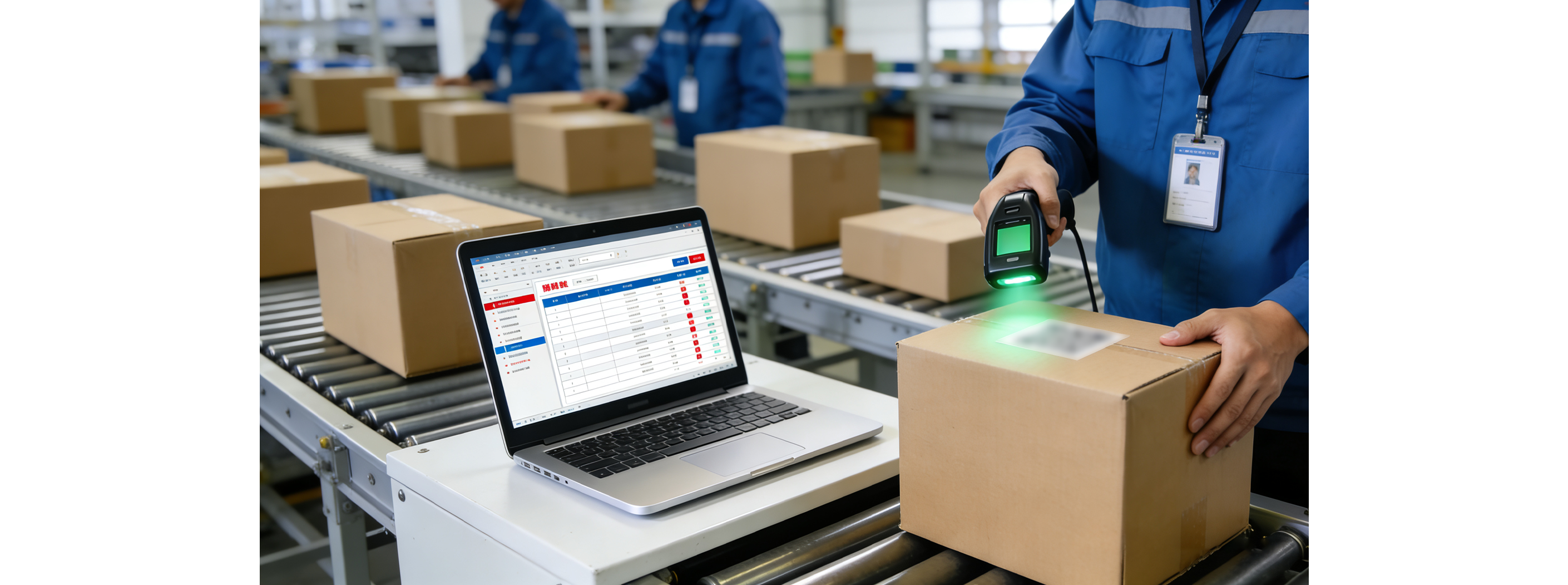
Traditional sorting processes heavily rely on manual operations. From goods receiving and information verification to route assignment, every step requires human intervention. Especially when handling large volumes and high-frequency orders, the efficiency bottleneck of this model is fully exposed, leading to goods backlog, transit delays, and severely impacting the response speed of the entire logistics chain.

1.2. Accuracy Crisis: High Error Rate and Information Black Hole
The inherent flaw of manual operations is an unavoidable error rate. Factors such as visual fatigue and operational negligence can easily lead to goods being mis-sorted, missed, or sent to the wrong destination. These errors not only trigger customer complaints but also incur high reverse logistics costs (e.g., returns, exchanges, re-delivery), and under traditional models, real-time tracking of goods information is difficult.

1.3. Cost Pressure: Continuously Rising Labor and Operating Expenses
The logistics industry is labor-intensive, and labor costs are a major component of its operating expenses. As labor costs rise year by year, the model relying on a large number of sorting workers becomes increasingly unsustainable. Additionally, the secondary processing costs caused by high error rates and compensation costs for lost goods jointly drive up the overall operating costs of enterprises.

1.5. Lack of Digitalization and Intelligence: Difficulty in Responding to Dynamic Demand
In the digital era, data is the core driver of decision-making and optimization. Traditional sorting systems have low informatization levels, with data collection relying on manual entry and information updates delayed, making it difficult to form real-time, accurate data streams. This prevents managers from effectively monitoring, analyzing, and optimizing the sorting process, let alone flexibly responding to rapid changes in market demand.
Chapter 2: How RFID Technology Reshapes Logistics Sorting – Solutions and Implementation Path
RFID technology provides a revolutionary solution to the above pain points through its non-contact automatic identification capability. It can transform physical goods into information units that can be tracked and managed in real time in the digital world, thereby achieving automation, intelligence, and transparency in the sorting process.
2.1. Core Solution: Leap from "Single Point Scanning" to "Batch Reading"
Unlike the limitations of traditional barcode technology, which requires "one scan per item" and "must be aligned," the core advantage of RFID technology lies in its non-contact, long-distance, and multi-tag simultaneous reading capability.
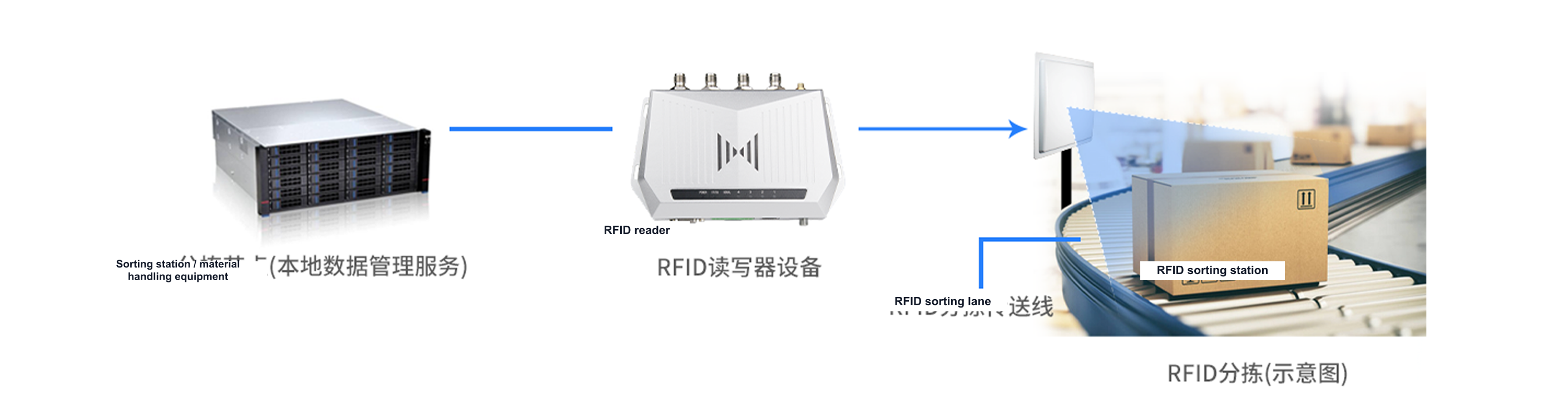
• For Low Efficiency: Channels or gantries equipped with RFID readers on the sorting line can instantly read tag information of entire boxes or batches of goods as they pass at high speed, without opening boxes or scanning individually. This improves the efficiency of sorting information entry from "seconds per item" to "milliseconds per batch," greatly increasing processing speed and throughput.
• For High Error Rate: It eliminates sorting errors caused by human mistakes at the source. The system can automatically match order data based on the read RFID tag information and instruct sorting equipment (such as AGV robots) to send goods to the correct exit or chute, achieving accuracy rates of over 99%.
• For Information Black Hole: Each goods item with an RFID tag becomes a movable unique information node. By deploying readers at key nodes such as inbound, shelving, sorting, and outbound in the warehouse, a real-time tracking network covering the entire process can be built, achieving visibility of goods location and status, completely solving the problem of information opacity.
2.2. Technical Implementation Architecture: Building the "Neural Network" of Intelligent Sorting
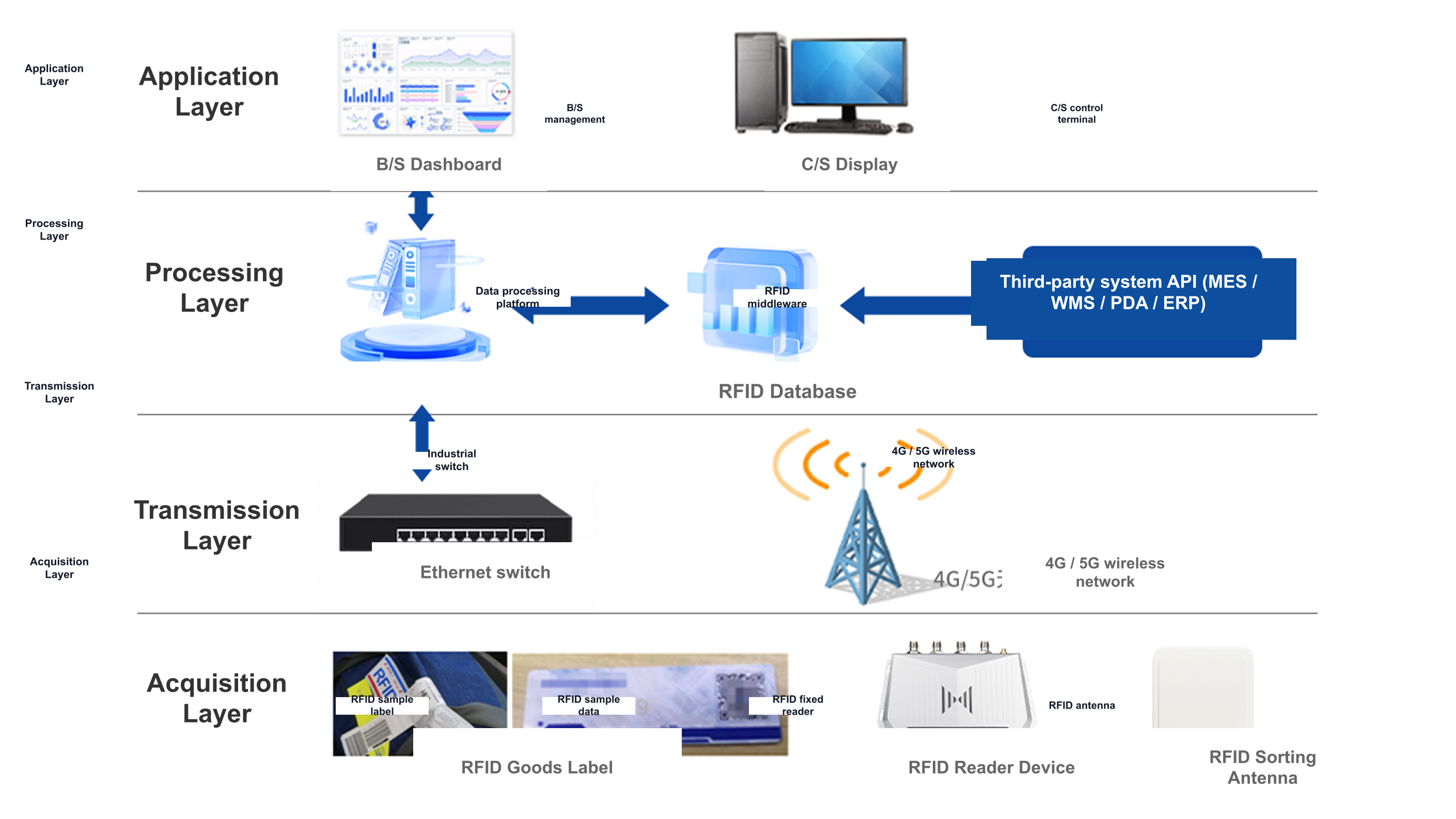
A complete RFID-based logistics sorting system is a complex ecosystem composed of hardware, software, and networks working together. Its typical system architecture usually adopts a layered design to ensure efficient collaboration among modules. Through this complete technical architecture, the RFID sorting system can achieve a closed-loop operation from goods entry, automatic information collection, intelligent path planning, to automated physical sorting, elevating sorting operations to a new level of intelligence.
Hardware Layer (Physical Perception Layer):
RFID Tag: This is the information carrier, attached or embedded to each package, pallet, or carton, storing a unique product identification code (EPC) and other related information.

RFID Reader/Antenna: This is the core of data collection, strategically deployed at key locations such as the entrance, channels, and sorting chutes of the sorting line, responsible for activating tags and reading/writing data.

Automated Sorting Equipment: Includes conveyor belts, cross-belt sorters, wheel sorters, AGV (Automated Guided Vehicle) robots, etc., responsible for executing physical sorting actions based on system instructions.
Central Controller (PLC/PC): Acts as the execution brain, receiving instructions from the upper system and directly controlling the operation of readers and sorting equipment.
Software Layer (Data Processing and Middleware):
RFID Middleware: This is the "nerve center" of the system, responsible for managing and filtering massive raw data from multiple readers, performing data cleaning, deduplication, and smoothing, and then passing meaningful business data to upper application systems. It solves the complexity of RFID data flow and is a key bridge connecting hardware and application software.
Database System: Used to store key data such as RFID tag information of all goods, order information, sorting paths, and status history, providing support for query, traceability, and data analysis.
Application Layer (Business Management and Decision):
Warehouse Management System (WMS) / Sorting Control System (SCS): This is the business software that directly interacts with users. It receives order information, formulates sorting strategies, sends instructions downward to middleware and controllers, and feeds sorting results back to upper systems (such as ERP). This system also provides visual monitoring interfaces, report analysis, and abnormal alarm functions, helping managers achieve overall control and optimization decisions.
Chapter 3: Advantages
The return on investment of an RFID system is reflected in multiple aspects:
Traditional sorting processes heavily rely on manual operations. From goods receiving and information verification to route assignment, every step requires human intervention. Especially when handling large volumes and high-frequency orders, the efficiency bottleneck of this model is fully exposed, leading to goods backlog, transit delays, and severely impacting the response speed of the entire logistics chain.
• Direct Economic Benefits:
Labor Cost Savings: Directly reduce salary and welfare expenses by reducing the number of employees required in sorting positions.
Error Cost Reduction: High accuracy means fewer mis-shipments and losses, thereby reducing reverse logistics, customer compensation, and brand reputation damage.
Inventory Cost Optimization: For example, at Marks & Spencer, within one year of implementing RFID, inventory holding costs were reduced by £500,000, thanks to more accurate inventory management and faster turnover.
• Indirect Strategic Value:
Customer Satisfaction Improvement: Faster and more accurate delivery experiences can significantly enhance customer satisfaction and loyalty.
Enhanced Decision-Making Capability: Real-time, accurate data streams provide management with a data foundation for optimizing processes, predicting demand, and formulating precise strategies.
Market Competitiveness: In today's homogenized logistics services, efficient and intelligent sorting capabilities are an important moat for building core competitiveness of enterprises.
With technological maturity and large-scale application, the cost of RFID tags and equipment is continuously decreasing, which will further shorten the return on investment cycle, making it a realistic choice for more logistics enterprises.